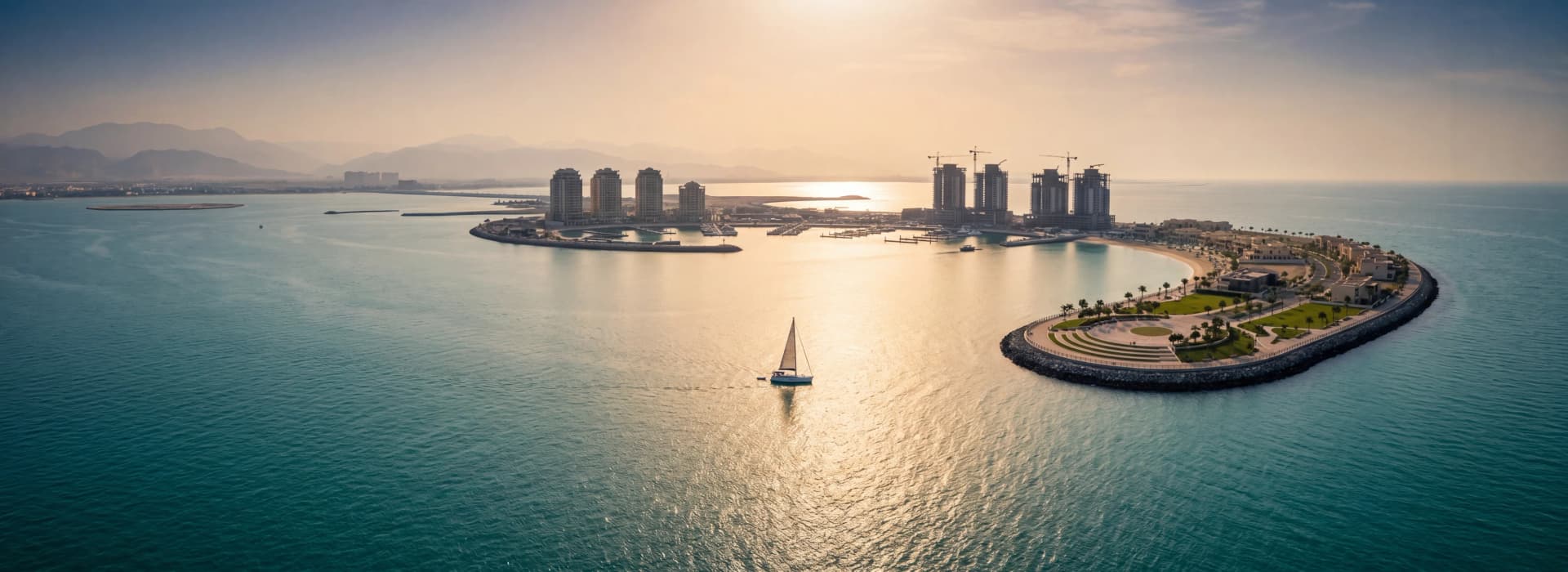
Ras Al Khaimah: The UAE's Next Major Investment Hotspot
For years, Ras Al Khaimah occupied a quiet corner of the UAE's investment map. While Dubai drew global capital and Abu Dhabi commanded sovereign wealth, the northernmost emirate built steadily and largely out of the spotlight. That picture has shifted materially. A combination of strategic infrastructure investment, economic diversification, rapidly rising property transaction volumes, and the imminent arrival of the Gulf's first integrated casino resort are drawing the attention of investors and multinationals at a pace the emirate has never previously seen. This analysis examines the structural drivers, sectors generating measurable returns, how RAK compares with its larger neighbours, and the risks informed investors should assess. This article is part of our Best Areas to Invest in Dubai 2026, a complete resource for NRI and international investors looking to understand ROI, property types, and long-term strategy in Dubai.
Strategic Location and Infrastructure
Ras Al Khaimah sits approximately 100 kilometres north of Dubai, reachable in around 45 to 60 minutes by road via the E311 and E11 highways. That proximity to the region's most liquid commercial hub is one of the emirate's most underappreciated structural advantages. Residents and businesses can access Dubai International Airport in under an hour while benefiting from property prices and operating costs substantially lower than in Dubai.
The emirate's international airport has expanded its route network with new connections to European and South Asian destinations. Five seaports, including the deep-water facility at Saqr Port, provide direct access to Gulf, Red Sea, and Indian Ocean shipping lanes. RAKEZ cites this multi-modal connectivity as a core proposition for the 40,000-plus companies operating within its ecosystem. A 3.1-million-square-foot RAK Central mixed-use development unveiled in 2025 signals ambitions to create a more defined urban centre alongside the emirate's dispersed resort clusters.
Economic Diversification and Key Growth Sectors
Ras Al Khaimah has reduced its dependence on extractive industries considerably over the past decade. S&P estimates place RAK's projected GDP growth at approximately 2.7 percent annually, underpinned by a deliberate broadening of the economic base across tourism, manufacturing, real estate, technology, education, and sustainability.
Tourism and Hospitality
Tourism is the sector drawing the most immediate international attention. The Ras Al Khaimah Tourism Development Authority reported 1.35 million overnight visitors in 2025, a 6 percent year-on-year increase, with tourism revenues growing 12 percent in the same period. The MICE and destination wedding segment delivered a 25 percent rise in revenues.
The pipeline underpinning the next phase is substantial. Hotel inventory is projected to exceed 14,600 rooms by 2027, more than doubling the current 7,144 keys, with 71 percent of that pipeline in the five-star category. Brands committed to opening include Wynn, Four Seasons, Fairmont, Janu, Taj, and NH Collection. The anchor project is Wynn Al Marjan Island, a USD 5.1 billion integrated resort and the Gulf's first legal casino, with a 2027 targeted opening. RAKTDA's formal visitor target is 3.5 million arrivals annually by 2030.
Real Estate and Freehold Property
Property transaction volumes in RAK reached AED 15.08 billion in 2024, a 118 percent increase in transaction values versus the prior year. Approximately 30,000 residential units have been launched since 2022, with around 30 percent classified as branded residential offerings, according to Colliers research. Residential supply is projected to double by 2030, requiring an estimated 45,000 new units to house a population forecast to grow from approximately 400,000 today to 650,000 by the decade's end.
Manufacturing, Free Zones, and Business
Manufacturing remains a cornerstone of RAK's economy. RAKEZ hosts dedicated industrial zones at Al Ghail, Al Hamra, and Al Hulaila, serving heavy industry via Saqr Port. US-based Statevolt announced a USD 3 billion battery manufacturing facility at Al Ghail in 2024. RAKEZ registered approximately 19,000 new companies in 2025, a 44 percent year-on-year increase, bringing total registrations to over 40,000 entities across 50-plus sectors. Technology and consultancy firms now account for around 38 percent of new registrations, reflecting a shift toward a services economy alongside manufacturing.
Education, Healthcare, and Sustainability
RAKEZ's Academic Zone hosts campuses from the University of Stirling and Bath Spa University. The emirate's infrastructure includes eight hospitals and a developing healthcare network supporting its livability proposition. New master communities are being designed around environmental certification standards. The emphasis on beach conservation, mangrove protection, and controlled development density is increasingly aligned with ESG-oriented capital flows from institutional investors and high-net-worth buyers applying environmental criteria to investment decisions.
Government Vision and Investor-Friendly Policies
RAK Vision 2030 provides the strategic framework for the emirate's development trajectory, centring on economic diversification, population growth to 650,000 residents, tourism expansion, and sustainable urban development. RAKEZ offers 100 percent foreign ownership, zero corporate income tax, zero personal income tax, and no withholding taxes. Business setup costs are lower than equivalent structures in most Dubai free zones.
S&P upgraded RAK's long-term outlook from 'stable' to 'positive' in late 2023, reflecting confidence in the emirate's fiscal trajectory and governance quality. The freehold property market, accessible to international buyers in designated zones including Al Marjan Island, Al Hamra Village, and Mina Al Arab, operates under UAE federal real estate law. There is no property transfer tax, no capital gains tax, and no annual property ownership tax. Property ownership in qualifying areas can also provide a pathway to UAE residency under the federal Golden Visa programme, subject to meeting the AED 2 million investment threshold.
Investment Performance and Market Data
The table below compares RAK's investment profile with Dubai and Abu Dhabi across the metrics most relevant to property and business investors.
| Metric | Ras Al Khaimah | Dubai | Abu Dhabi |
|---|---|---|---|
| Avg. Apartment Price (1BR) | AED 600K–1M | AED 1.5M–2.5M | AED 900K–1.8M |
| Gross Rental Yield | 6–8% (select areas 8–12%) | 5–7% | 5–7% |
| Freehold Zones | Al Marjan, Al Hamra, Mina Al Arab | Extensive | Selected |
| Income Tax | Zero | Zero | Zero |
| Free Zone | RAKEZ – 40,000+ companies | JAFZA, DIFC, 30+ zones | ADGM, KIZAD, others |
| Market Stage | Emerging / High-growth | Mature / Established | Established / Growing |
| Liquidity | Lower (developing) | Very High | High |
| Entry Cost vs Dubai | 30–50% lower | Benchmark | Higher than RAK |
Within RAK's property market, location materially affects yield and appreciation profiles. Colliers data places apartment price growth at 17 to 21 percent year-on-year between 2024 and 2025 at Al Marjan Island and Mina Al Arab. Certain villa and townhouse developments recorded price gains of up to 30 percent over the same period. The Bayut Annual RAK Market Report for 2025 identifies Shamal Julphar as the top-performing villa investment area by yield, at 6.35 percent projected return. Al Hamra Village recorded a price-per-square-foot increase of approximately 42 percent in 2025. Five-bedroom residences in the community now command prices above AED 14 million, indicating deepening high-net-worth buyer interest.
How RAK Compares to Dubai and Abu Dhabi
Dubai and Abu Dhabi offer deeper market liquidity, more established legal infrastructure for complex commercial transactions, a higher population density driving rental demand, and globally recognised financial centres. These are real advantages for investors prioritising certainty of exit and near-term liquidity.
RAK's differentiated value lies in its entry price point and market cycle stage. Properties are currently 30 to 50 percent cheaper than equivalent Dubai assets per square foot. That affordability gap, combined with yield compression still to come as the market matures, underpins the investment thesis positioning buyers for next-cycle appreciation. The Wynn effect is a structural catalyst with no direct Dubai equivalent at the same market stage: the resort is expected to create over 9,000 jobs and drive a step-change in international air arrivals.
The trade-off is market depth. Dubai's secondary market turns over with far greater frequency, meaning investors who need liquidity within 2 to 3 years face more execution risk in RAK. The quality-of-life comparison is more nuanced: RAK offers lower density, cleaner beaches, proximity to Jebel Jais, and a pace of daily life that many residents prefer to central Dubai, but Dubai's retail, employment, and entertainment ecosystem remains unmatched in the region.
Risks and Challenges
A balanced assessment of RAK requires an honest view of the structural risks. The matrix below organises primary risk factors by severity and likelihood.
| Risk Factor | Severity | Likelihood | Mitigation |
|---|---|---|---|
| Liquidity / Resale Market | Medium | Medium | Target established communities; hold 5+ years |
| Supply Surge (30K+ units launched) | Medium-High | Medium | Focus on completed or near-complete stock |
| Wynn Resort Timeline Risk | Medium | Low-Medium | Diversify; monitor construction milestones |
| Shallow Rental Tenant Pool | Medium | Medium | Short-term rental strategy near Al Marjan / Al Hamra |
| Regulatory Change | Low | Low | UAE's stable legal framework; monitor RERA updates |
| Currency Risk (AED/USD peg) | Low | Very Low | USD peg eliminates forex risk for USD investors |
Supply risk is the most frequently cited structural concern. Approximately 30,000 units launched since 2022 represent a meaningful inventory increase for a market that was, until recently, relatively small. If tourism arrivals and population growth do not arrive at the projected pace, absorption could lag, placing downward pressure on rents and resale values in newly delivered communities. The rental tenant base is currently shallower than Dubai's, which affects short-term rental coverage ratios for leveraged buyers. The Wynn timeline carries construction and regulatory risk: any material delay to the 2027 opening could slow the step-change in international arrivals that the investment thesis depends on.
Future Outlook
Multiple research sources describe RAK as being in an early-to-mid growth phase of its expansion cycle. Forecasts project property price appreciation of 8 to 15 percent annually over coming years, supported by infrastructure delivery and rising demand, though these ranges are scenario estimates, not guarantees. The population trajectory is the most fundamental indicator: officials project growth from 400,000 to 650,000 by 2030. Hotel inventory is expected to double to over 14,600 keys by 2027. Visitors are targeted to reach 3.5 million by 2030, requiring a compound annual growth rate of approximately 18 percent from 2025 levels.
RAKEZ's expansion from approximately 18,000 companies in 2024 to over 40,000 by late 2025 demonstrates the emirate's ability to attract commercial activity at scale. If the manufacturing and services ecosystem continues to deepen, the residential demand base will broaden beyond tourism-linked buyers to include a growing cohort of workers and professionals living permanently within the emirate.
Disclaimer: This article is for informational purposes only and does not constitute financial, investment, or legal advice. Dubai real estate market conditions can fluctuate; always consult with a qualified professional before making any investment decisions. Dubai Property Insight is not liable for any actions taken based on this content.
Related Questions
Ras Al Khaimah operates under UAE federal law, providing investor protections consistent with those in Dubai and Abu Dhabi. There is no income tax, capital gains tax, or property ownership tax. The emirate received an S&P outlook upgrade to 'positive' in late 2023. Freehold zones use established title deed registration processes. Purchasing in RERA-regulated developments adds a further layer of buyer protection. As with any real estate market, independent legal and financial due diligence is essential before committing capital to any specific project or developer.
Gross rental yields in RAK typically range between 6 and 8 percent across mainstream residential communities, with tourism-facing assets in Al Marjan Island and Mina Al Arab reporting yields of 8 to 12 percent in short-term rental strategies, per Colliers research. Bayut's 2025 market data places Shamal Julphar villa yields at 6.35 percent and Julfar at 5.79 percent. These are gross yields and do not account for service charges, management fees, or vacancy periods. Furnished units in high-tourism areas tend to command premium rental premiums but carry higher management costs and seasonal demand variation.
RAK properties are currently priced approximately 30 to 50 percent below equivalent Dubai assets per square foot, offering a lower entry cost with higher potential upside if the growth trajectory materialises as projected. Dubai offers greater market liquidity, a deeper tenant base, and a more established secondary resale market. RAK is better suited to investors with medium-to-long-term horizons seeking yield plus capital appreciation, while Dubai is generally preferred by investors prioritising near-term liquidity and transactional certainty. The two markets serve different investor profiles rather than being direct substitutes.
Wynn Al Marjan Island is a USD 5.1 billion integrated resort under construction on Al Marjan Island, targeting a 2027 opening. It will be the first legal casino in the Gulf region and is expected to create over 9,000 direct jobs. The resort includes over 1,500 hotel rooms, a 20,900-square-metre casino floor across two levels, luxury retail, and entertainment facilities. Its significance lies in the projected step-change in international high-net-worth tourist arrivals, which would directly support property demand and rental performance across adjacent residential communities. Construction reached its main tower topping-out milestone in 2025.
Al Marjan Island shows the strongest near-term appreciation potential due to its direct proximity to the Wynn resort and concentration of branded residential developments, with apartment prices rising 21.3 percent per square foot in 2025 per Bayut data. Al Hamra Village offers an established community recording approximately 42 percent villa price appreciation in 2025. Mina Al Arab provides waterfront living with projected yields around 4.5 to 5 percent. Shamal Julphar is emerging as a yield-focused investment area at approximately 6.35 percent. The optimal choice depends on investment horizon, income versus appreciation priorities, and proximity to the tourism anchor.
Yes. Foreign nationals can purchase freehold property in designated zones including Al Marjan Island, Al Hamra Village, and Mina Al Arab. Ownership is registered by title deed under UAE federal real estate law. UAE residency is not required to purchase in these zones. Property ownership meeting the AED 2 million investment threshold can provide a pathway to UAE residency under the federal Golden Visa programme. Both land and strata title products are available depending on the development, and buyers should verify the specific ownership structure and associated rights before purchase.
RAKEZ is the Ras Al Khaimah Economic Zone, the emirate's primary free zone and licensing authority overseeing six specialised zones across industrial, academic, and commercial activity. It offers 100 percent foreign ownership, zero income tax, zero withholding tax, and cost structures typically lower than equivalent Dubai free zone setups. Over 40,000 companies from more than 100 countries operate within RAKEZ across 50-plus sectors as of 2025. New registrations grew 44 percent year-on-year in 2025. Both free zone and non-free zone entity formations are available, with access to RAK Port, Saqr Port, and RAK International Airport for logistics-dependent operations.
The primary risks include a shallower secondary resale market relative to Dubai, meaning exit liquidity is more limited for investors with short horizons. Supply risk is real: approximately 30,000 units have been launched since 2022, and absorption depends on population and tourism growth arriving broadly as projected. The Wynn resort timeline carries construction and regulatory risk. The rental tenant base is currently smaller than Dubai's, affecting rental coverage for leveraged buyers. The AED's peg to the USD eliminates currency risk for dollar-based investors, and the overall UAE regulatory environment is stable, but emerging market real estate inherently carries higher variance than mature markets.
RAK recorded 1.35 million overnight visitors in 2025, a 6 percent year-on-year increase, with tourism revenues growing 12 percent per RAKTDA data. The MICE and destination wedding segment delivered 25 percent revenue growth in the same year. The emirate's formal target is 3.5 million annual visitors by 2030. Hotel inventory is expected to more than double to over 14,600 keys by 2027, with 71 percent of the pipeline in the five-star category. Key attractions include Jebel Jais, the UAE's highest peak and home to the world's longest zipline, alongside a growing portfolio of adventure, beach, and cultural experiences.
RAK Vision 2030 is the emirate's long-term strategic development framework centred on economic diversification, population growth to 650,000 residents, tourism expansion to 3.5 million annual visitors, and sustainable urban development. For investors, it provides policy continuity and signals long-term government commitment to infrastructure investment and regulatory stability. The vision underpins planning frameworks for master communities, free zone expansion, and hospitality development. Its sustainability emphasis aligns with ESG-oriented capital flows from institutional investors and high-net-worth buyers applying environmental and governance criteria to their investment decisions.