

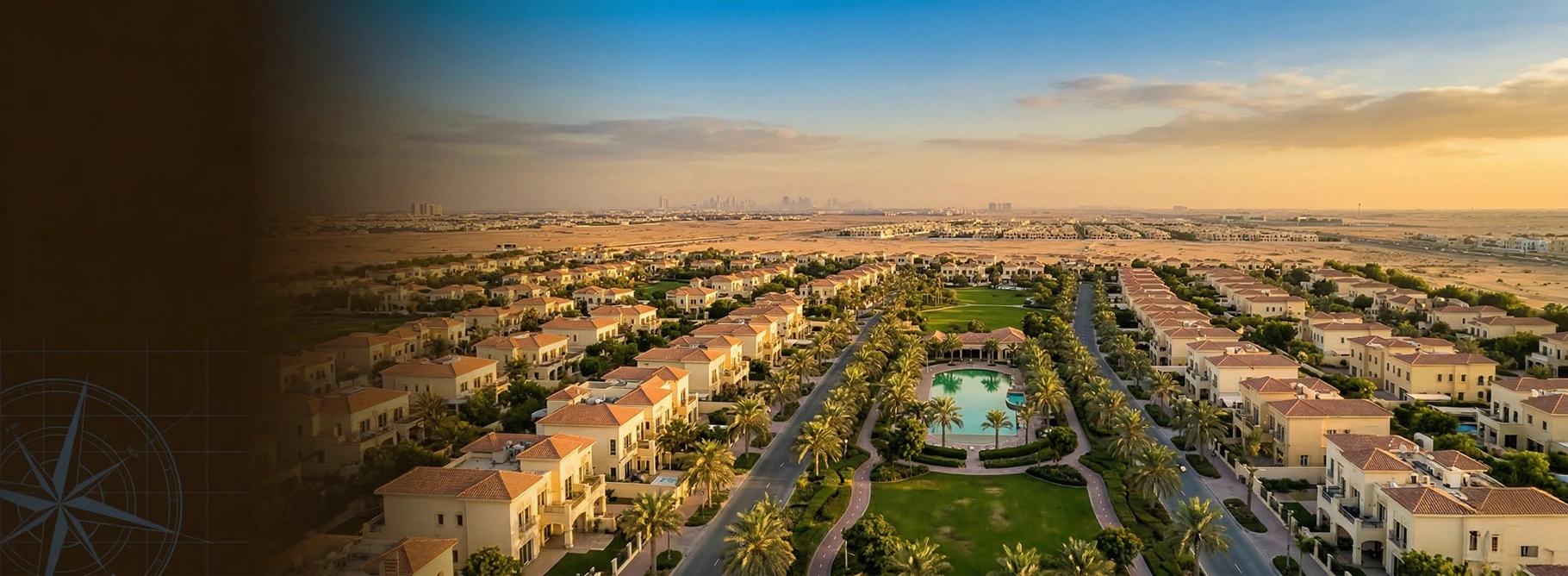
Dubailand Property Market Report 2026: Prices, Demand & Top Projects
If you've been tracking Dubai's property market over the last few years, Dubailand has likely come up more than once. What started as an ambitious leisure and residential vision has gradually become one of Dubai's most active real estate zones drawing buyers who want space, value, and access without paying Downtown prices.
This report looks at where the Dubailand market stands in 2026: what's driving demand, where prices are sitting, which projects are generating attention, and what the area's growth trajectory looks like for buyers and investors.
What Is Dubailand and Why Does It Matter in 2026?
Dubailand is a large mixed-use development zone in Dubai covering over 3 billion square feet. It sits along Emirates Road (E611) and Al Ain Road (E66), making it relatively accessible despite being further from the coast than central Dubai neighbourhoods.
For years, the area was associated with ambitious but partially realised plans. That narrative has shifted. Since 2021, construction activity has picked up significantly, with established communities like Villanova, Mudon, Arabian Ranches 3, and Damac Hills 2 now either completed or well into delivery. Newer launches from Sobha, Emaar, Damac, and smaller developers have added considerable depth to the pipeline.
The result is a district that now offers a genuine cross-section of Dubai residential life, townhouses, villas, and apartments across different price bands, with enough delivered product that buyers can evaluate what they're actually getting rather than relying purely on renders.
Dubailand Property Prices in 2026
Villas and Townhouses
Villa and townhouse prices in Dubailand vary quite a bit depending on the specific community, size, and developer. As a general guide for 2026:
- 3-bedroom townhouses in communities like Villanova or Mudon range broadly from AED 1.8M to AED 2.8M, depending on plot size and finish.
- 4-bedroom townhouses and semi-detached villas typically range from AED 2.5M to AED 3.8M.
- Standalone villas, particularly in Damac Hills, Arabian Ranches 3, or Sobha-branded communities, can range from AED 3.5M to upwards of AED 7M for larger, premium plots.
Off-plan prices from newer launches often come in at a modest premium over completed resale stock in comparable communities, reflecting both branded developer premiums and the longer wait for delivery.
Apartments
Apartment supply in Dubailand is more concentrated in areas like Liwan, Skycourts, and the Arjan/Dubailand Residential Complex corridor. Prices here are generally lower than villa communities:
- Studios: AED 350K – AED 550K
- 1-bedroom: AED 550K – AED 950K
- 2-bedroom: AED 900K – AED 1.6M
The apartment segment attracts investors and end-users who want a Dubai address at a more accessible price point. Rental yields in this segment have historically been competitive, often ranging from 6% to 8.5% gross depending on location and unit type.
Demand Drivers: What's Pulling Buyers into Dubailand
Value Relative to Established Communities
Buyers priced out of Arabian Ranches, Dubai Hills, or Jumeirah-facing communities have increasingly looked at Dubailand as a credible alternative. You get larger homes often with private gardens and parking at meaningfully lower per-square-foot rates.
Infrastructure Improvement
Road connectivity has improved. The area benefits from proximity to key routes including Emirates Road, Dubai Al Ain Road, and Sheikh Zayed Bin Hamdan Road. There's also ongoing development of retail, school, and healthcare infrastructure within and adjacent to the major communities.
Family-Oriented Living
Dubailand communities are designed with families in mind. Parks, cycle tracks, community centres, and pools are standard in the larger master plans. Schools like Gems FirstPoint, Fairgreen International, and Ranches Primary are established in or near the area, removing one of the key hesitations buyers historically had about moving further out.
Off-Plan Flexibility
Developers in Dubailand continue to offer competitive payment plans often 60/40 or 70/30 structures with post-handover options. This keeps the entry barrier manageable for buyers who need time to arrange financing, particularly for the AED 2M–4M villa segment.
Top Projects in Dubailand to Watch in 2026
Sobha Sanctuary
One of the most talked-about launches in the area, Sobha Sanctuary sits along Lehbab Road and is positioned as a premium villa community. It features nature oriented design with a focus on green space and water features. Sobha's build quality reputation gives it credibility in the off-plan market, and early phases have seen strong uptake.
Sobha Elwood
Another Sobha project in Dubailand, Elwood takes a forest-themed design approach with an emphasis on biodiversity and landscaping. It's positioned for buyers who want a more distinctive residential environment rather than a conventional villa community layout.
Arabian Ranches 3 (Emaar)
Now well into delivery, Arabian Ranches 3 has established itself as one of the most complete communities in the broader Dubailand area. Emaar's brand, delivery track record, and the community's connectivity to the wider Arabian Ranches master plan make it a reference point for resale valuations.
Damac Hills 2
Formerly known as Akoya Oxygen, Damac Hills 2 is a large-scale community that has matured significantly. It now has operational amenities, a water park, schools nearby, and a resident population that has built genuine community infrastructure. Prices here tend to be among the more affordable villa options in Dubailand.
Villanova (Dubai Properties)
A well-established community with a mix of townhouses and villas. Villanova has completed multiple phases and offers good resale liquidity compared to some newer projects. It tends to attract buyers who want a proven community rather than an off-plan bet.
Investment Outlook: Is Dubailand Worth Considering in 2026?
The investment case for Dubailand in 2026 isn't straightforward. There are genuine strengths, space, relative affordability, and improving infrastructure but investors should go in with realistic expectations.
Capital appreciation in Dubailand has historically lagged behind Dubai's coastal and central districts. The area's sheer size means supply is consistently added, which keeps a ceiling on price growth in most sub-communities. That said, the right community at the right price point can still deliver reasonable returns, particularly in the mid-tier villa segment where tenant demand from families is consistent.
For rental yield investors, the apartment segment in areas like Arjan and Liwan remains attractive, though management costs and vacancy rates should be factored carefully against headline yield numbers.
For end-users planning a 5–10 year horizon, Dubailand makes a lot of practical sense. You get more living space per dirham than most comparable Dubai areas, with a community infrastructure that continues to improve.
What to Watch Over the Rest of 2026
- New infrastructure announcements, particularly around planned metro or tram extensions that could affect connectivity and valuations.
- Delivery timelines for major off-plan communities Sobha Sanctuary and Elwood are key ones to track.
- Resale price trends in completed communities like Villanova and Arabian Ranches 3, which tend to be leading indicators for the broader Dubailand market.
- Supply additions from upcoming developer launches, which could affect absorption rates in the short term.
Related Questions
For families and long-term end-users, yes. The combination of space, improving amenities, and relatively accessible pricing makes it a practical choice. Investors should be selective focus on established communities with proven rental demand rather than early-stage launches.
Arabian Ranches 3, Villanova, Mudon, and Damac Hills 2 are among the most established family communities in Dubailand. Each offers parks, pools, and proximity to schools.
Dubailand generally offers villa pricing 20–35% lower than equivalent properties in Dubai Hills Estate, with the trade-off being a less central location and slightly less mature surrounding retail and dining infrastructure.
Off-plan in Dubailand can work for long-term investors with a 3–5 year horizon and a strong developer track record. The key risks are delivery delays and supply saturation in certain sub-markets. Established developers like Emaar and Sobha carry less delivery risk.
Emirates Road (E611) and Dubai Al Ain Road (E66) are the main arterials. Sheikh Mohammed Bin Zayed Road (E311) is also accessible and connects to Downtown Dubai, Business Bay, and the airports.