

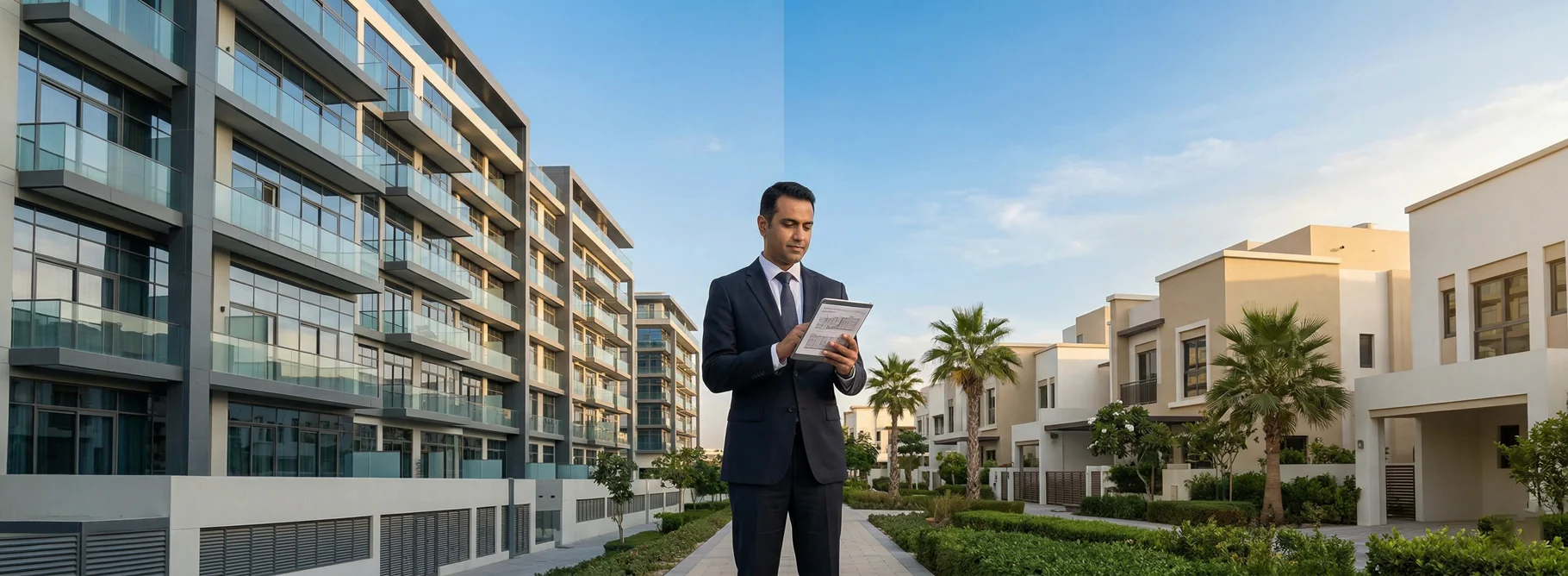
Dubai Property Portfolio Strategy 2026: A Step-by-Step Guide
How Smart Investors Structure Assets, Stack Yields and Build Long-Term Wealth in Dubai
Wealth in real estate is rarely created by a single transaction. It is built through structure, timing, and a clear understanding of what each asset in your portfolio is meant to do. Dubai in 2026 presents one of those rare alignment moments: rental yields that outperform most major cities, zero capital gains tax, a Golden Visa route tied directly to property ownership, and an infrastructure expansion programme that is reshaping entire corridors of the city. This guide walks you through the practical framework that experienced HNI investors are using to build and scale a Dubai property portfolio strategy in 2026.
What a Dubai Property Portfolio Strategy Actually Means
A property portfolio strategy is not about owning multiple units in the same building. It is about deliberate asset diversification across type, location, and purpose. Each asset should play a defined role: one producing reliable income, another building capital appreciation, a third perhaps qualifying for residency benefits.
The investors who consistently outperform in Dubai are not necessarily the ones who bought early. They are the ones who built with intention. They separate their income-producing assets from their appreciation plays. They stress-test payment schedules before committing. They track net yield after service charges and vacancy, not gross yield off a brochure.
A two-asset starting structure works well for most HNIs entering a second or third position. One high-yield apartment that generates steady monthly income and maintains liquidity. One villa or townhouse in a submarket with a strong masterplan, limited supply pipeline, and a family lifestyle profile that supports long tenancy durations and capital growth over time. That pairing is not accidental. It is the architecture of a portfolio that earns while it appreciates.
Why Dubai 2026 Is a Rare Window for Portfolio Building
Several conditions are aligning simultaneously that rarely appear together in a single market. The DLD recorded over 270,000 residential transactions worth AED 917 billion in 2025, a 20% year-on-year surge. That volume signals genuine end-user demand and deep liquidity, not speculative noise.
At the same time, the market is transitioning from the rapid acceleration of 2023 to 2025 into a more measured phase. Knight Frank projects around 3% price growth in the prime segment through 2026, while Cushman and Wakefield Core forecasts 5 to 8% appreciation in the mainstream market. A moderating pace is not a warning sign. For portfolio builders, it signals a better entry environment than the frenzy of the previous two years.
Three structural advantages compound the opportunity. There is no personal income tax on rental earnings and no capital gains tax on property sales. The Dirham is pegged to the US dollar, removing currency volatility risk for dollar-denominated investors. And freehold ownership in designated zones is protected by a mature legal framework, with RERA oversight and escrow protections that give global investors genuine confidence.
What the Yield and Appreciation Data Shows
Understanding where each asset class performs in 2026 is essential before structuring any position. Average gross residential rental yields in Dubai sit between 6% and 8% in early 2026, with studios and one-bedroom apartments in high-demand areas like JVC, Business Bay, and Discovery Gardens consistently pushing toward 8% and above, according to data compiled by REIDIN and Engel and Volkers.
Villas and townhouses tell a different story. REIDIN's December 2025 benchmarks show villa yields averaging 4.63% citywide, but villa prices have risen 15.16% year-on-year, significantly outpacing apartments at 12.52%. Overall, villa values have climbed 206% since the pandemic. The yield compression in villas is not a problem. It reflects how much capital growth that asset class has delivered.
The practical read is straightforward. If you need income today, apartments in mid-market communities deliver it. If you are building capital for a 5 to 7 year horizon, a villa or townhouse in a masterplan community with strong social infrastructure and limited new supply is where long-term wealth is being created in 2026.
| Asset Type | Avg Gross Yield | YoY Price Growth | Best Role in Portfolio |
|---|---|---|---|
| Studio / 1-bed apartment | 7–9% | ~12.5% (REIDIN Dec 25) | Income anchor, liquidity |
| 2-bed apartment | 6–7% | ~12.5% | Balanced income + growth |
| Townhouse | 5.5–7% | ~15% (villa segment) | Family demand, appreciation |
| Villa | 3.5–5% | 15.16% (REIDIN Dec 25) | Capital preservation + growth |
The Practical Framework: How to Structure Your Portfolio
Start with your income anchor. This is the property that pays for itself, services any mortgage, and keeps your overall position cash-flow positive. A one or two bedroom apartment in a community with proven rental demand and manageable service charges is the right choice here. JVC, Business Bay, and Dubai South are communities where institutional-level demand from young professionals and corporate tenants keeps vacancy rates low.
Once the anchor is stable, the second acquisition should contrast deliberately. A townhouse or mid-size villa in a community with a long infrastructure runway: an area where schools, parks, and connectivity are still being built out rather than already priced in. Dubai Hills Estate, The Valley, and Yas Island-adjacent corridors in Abu Dhabi all fit this profile. You are buying the appreciation story before it becomes consensus.
Select areas with a masterplan, not just a marketing deck. Government-backed communities with clear phased delivery schedules carry far lower risk than standalone towers with nothing surrounding them. The D33 agenda and Dubai 2040 Urban Master Plan give you a policy-level map of where the city is heading.
Track net yield, not gross. Service charges in some Downtown and DIFC towers exceed AED 25 to 30 per sq ft annually. At that level, a 6% gross yield can compress to 4% or lower after costs. Always calculate the full cost of ownership before comparing assets.
Plan your exit before you enter. Know at what price point you would sell, what your target holding period is, and whether you want liquidity at year 3 or year 7. Off-plan positions require a minimum 30 to 40% payment before a developer will issue a No Objection Certificate for resale. Factor this into your cash flow planning.
Golden Visa Integration: A Strategic Decision, Not an Afterthought
The Golden Visa programme changed meaningfully in 2025. The previous requirement to pay AED 1 million upfront before qualifying was removed. A property purchase of AED 2 million or above from a RERA-approved developer now qualifies directly for a 10-year renewable residency visa.
For HNI investors, structuring your second property at or above the AED 2 million threshold is not simply a visa decision. It anchors your UAE residency, enables UAE bank accounts and business structures that give you operational access to the broader GCC market, and signals to future tenants and counterparties that you are a committed long-term participant in the market.
The Golden Visa should shape asset selection, not chase it. Do not buy a property purely to hit the threshold if the asset itself does not make sense in your portfolio. Find a property that meets your investment criteria, then confirm it qualifies. The visa is a compounding benefit, not the investment thesis.
Related Questions
Two is a meaningful starting point. One apartment generating income and one appreciation-focused villa or townhouse creates a structured position with distinct risk profiles. Scaling beyond two requires clear cash flow modelling and an understanding of how each new asset changes the overall yield and liquidity picture of the portfolio.
Gross yields on well-located one and two bedroom apartments typically range between 6% and 8% in 2026. After service charges, agency fees, and a conservative 5% vacancy allowance, net yields generally settle between 4.5% and 6.5% depending on the community and building. Always request the RERA service charge index for any building before committing.
No. As of 2025, off-plan properties from RERA-approved developers qualify for the Golden Visa provided the total purchase value is AED 2 million or more. The previous requirement for an AED 1 million paid down-payment has been removed, making off-plan one of the most accessible routes to qualifying.
Leverage is a tool, not a shortcut. For non-resident buyers, UAE mortgage financing is available at loan-to-value ratios of up to 50% for a first property and typically 40 to 45% for subsequent ones. The critical test is whether rental income comfortably covers mortgage repayments with a cushion for vacancy and maintenance. If it does, disciplined leverage accelerates portfolio growth. If it does not, it creates pressure that forces poor exit decisions.
Communities with a strong government-backed infrastructure timeline and currently limited supply tend to outperform. Dubai South with Al Maktoum International Airport expansion, Dubai Hills Estate as an established family destination, The Valley from Emaar, and waterfront masterplan communities in the Dubai Islands corridor are attracting the most analytical capital in 2026. These are areas where the story is backed by policy and infrastructure spend, not just developer marketing.