Dubai Hills Estate Off-Plan 2026: Is It Still Worth Buying?
Dubai Hills Estate by Emaar 2026: Is It Still One of the Best Areas to Invest in Dubai?
If you have been watching Dubai real estate for any length of time, Dubai Hills Estate keeps coming up. It is one of Emaar's biggest master-planned communities, and the off-plan pipeline there has not slowed down heading into 2026. But more launches, more options, and higher prices than three years ago raise a fair question: is this still a smart entry point, or have most of the gains already happened? This guide breaks down what is on the market right now, what the numbers say, and who this community actually makes sense for. This article is part of our Dubai Hills Estate Area Guide 2026, a complete resource for NRI and international investors looking to understand ROI, property types, and long-term strategy in Dubai.
What Dubai Hills Estate Actually Is?
Dubai Hills Estate is a joint venture between Emaar Properties and Meraas Holding, spread across roughly 11 million square metres in Mohammed Bin Rashid City. The community sits between Downtown Dubai and Dubai Marina, which gives it access to both corridors without the traffic pressure of either.
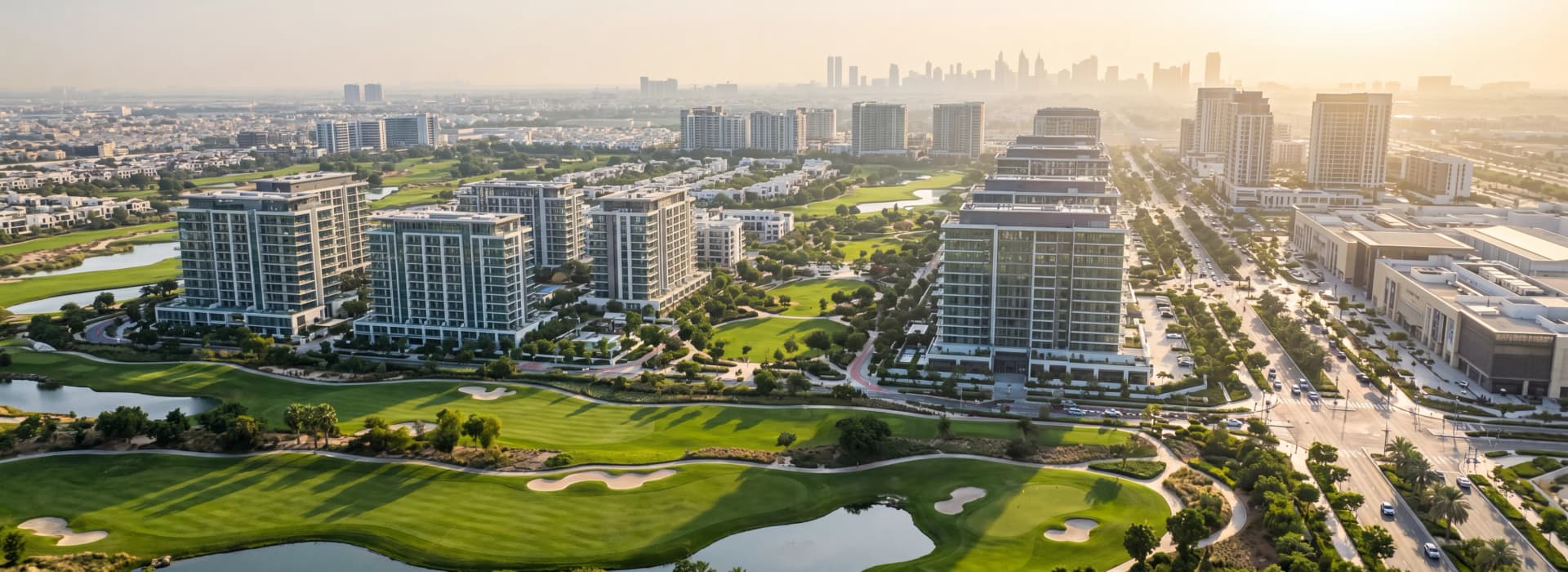
The spine of the community is an 18-hole championship golf course, surrounded by parks, cycling tracks, and Dubai Hills Mall. Schools, hospitals, and retail are all within the community, which is why it has consistently attracted families and long-term tenants rather than just short-term speculators.
Property types range from one-bedroom apartments to ultra-luxury villas. The off-plan segment in 2026 includes projects at very different price points, from AED 1 million entry-level apartments to Address-branded villas above AED 20 million.
Why Investors Are Still Paying Attention in 2026?
The honest answer is that the fundamentals have not weakened. Off-plan apartment prices in Dubai Hills Estate now average around AED 2,455 per square foot, against a secondary market average of AED 2,256 per square foot. That premium exists because buyers are pricing in future capital appreciation, not just current value.
Over the last three years, off-plan apartment prices in the community rose approximately 38 percent. Villas performed even stronger, with prices up around 59 percent over the same period, according to market data cited by property analysts tracking Emaar transactions.
Rental yields remain healthy. Apartments in the community are generating gross yields of around 6 percent on average, with units near Dubai Hills Mall and the park pushing toward 8.5 percent on short-term rental arrangements. Villas sit closer to 4.8 percent, which reflects longer tenancies and higher ticket prices.
The metro extension to Dubai Hills Estate, while still being planned at the time of writing, is already factored into buyer sentiment. If it proceeds on schedule, it will significantly expand the renter pool by making the area accessible to non-car commuters.
| Property Type | Avg. Gross Yield | Price Range (Off-Plan) | Typical Payment Plan |
|---|---|---|---|
| Apartments (1-3 BR) | ~6.07% | AED 1M - AED 2.5M+ | 80/20 or 90/10 |
| Townhouses | ~4.8% | AED 3.5M - AED 7M | 80/20 |
| Villas | ~4.8% | AED 10.4M - AED 23M+ | 80/20 or 90/10 |
| Short-term near Park/Mall | Up to 8.5% | AED 1.6M+ | Varies by project |
Active Off-Plan Projects and Price Points in 2026
The current off-plan inventory in Dubai Hills Estate covers a wide spectrum. For buyers looking at an entry below AED 1.5 million, Mallside Residence by Royal Development Company starts at AED 1 million with a 70/30 payment plan and Q4 2026 handover. Lime Gardens by Emaar starts at AED 1.12 million and is close to the skate park and community amenities, with handover already set for early 2026.
In the mid-range, Vida Residences Hillside starts from AED 1.8 million and features 32-plus amenities across 23 floors. Parkwood and Hillsedge, both by Emaar, are priced from AED 1.75 to 1.84 million with 2029 handover dates and 80/20 payment plans. These are longer holds designed for capital appreciation rather than immediate rental income.
At the premium end, Park Gate Phase 2 starts at AED 10.4 million for villas, while Address Villas Hillcrest, the first Address-branded villa community in Dubai, begins at AED 21.7 million. These products are aimed at high-net-worth buyers who want lifestyle as much as returns.
Rosehill is Emaar's most recent apartment launch in the community, starting at AED 1.6 million. It is golf-facing and positioned as a premium entry-point product within the Emaar portfolio. Palace Residences Hillside, another new launch, brings the Palace Hotels brand to everyday living in Dubai Hills and is expected to attract investors focused on rental premiums tied to brand value.
Who Should Buy Off-Plan Here, and Who Should Not?
Dubai Hills Estate off-plan is not the right fit for every buyer. Being clear about this matters because it directly impacts returns in the Best Areas to Invest in Dubai 2026.
Good fit for: Long-term investors willing to hold for four to six years. Buyers who want a mature community with infrastructure already in place. NRIs and expats planning to relocate to Dubai within a few years. Families who want top schools and green space within the same address. Investors targeting apartments near the park or mall for short-term rental income.
Not the right fit for: Buyers looking for a quick flip within 12 to 24 months. Investors chasing the highest yields in Dubai, as areas like JVC or Business Bay outperform on raw rental return. Budget-constrained buyers who need post-handover payment plans, as most Emaar projects here require milestone-linked construction payments. Buyers unfamiliar with off-plan timelines, since some projects here have 2028 and 2029 handover dates.
The community rewards patient capital. It was built for long-term residents, and the investor profile that has done best here reflects that.
Common Misconceptions About Buying Off-Plan in Dubai Hills Estate
One belief worth addressing: that Emaar's brand guarantee eliminates all risk. Emaar has a strong delivery record, but delays do happen across the industry. Due diligence still applies.
A second misconception is that all units appreciate equally. Location within the community matters significantly. Golf-facing and park-adjacent units have consistently outperformed interior-facing apartments in the same project. Buyers who do not check view orientation and unit position carefully often miss this.
A third point: off-plan here is not always cheaper than secondary. Premium units in sought-after Emaar launches now price above comparable secondary inventory at launch. The advantage is payment flexibility and the ability to lock in at pre-launch rates before prices move further. That gap has narrowed compared to 2021 and 2022, but it has not closed entirely.
Disclaimer: This article is for informational purposes only and does not constitute financial, investment, or legal advice. Dubai real estate market conditions can fluctuate; always consult with a qualified professional before making any investment decisions. Dubai Property Insight is not liable for any actions taken based on this content.
Related Questions
For investors with a three-to-six year horizon, yes. The community has strong fundamentals: established infrastructure, consistent rental demand, and Emaar's long delivery track record. Entry prices have risen considerably since 2021, but the risk profile here remains lower than many newer, less proven communities. Off-plan apartment prices have grown roughly 38 percent over the last three years, and rental demand from families and professionals keeps occupancy rates healthy. If you are patient and match the right profile, the case for Dubai Hills Estate still holds in 2026.
The lowest entry point currently is around AED 1 million for apartments in third-party projects like Mallside Residence. Emaar's own launches typically start from AED 1.1 to 1.6 million for one-bedroom units, with Rosehill and Vida Residences Hillside priced from AED 1.6 to 1.8 million. Townhouses begin in the AED 3.5 million range, while villas start significantly higher at AED 10.4 million for Park Gate Phase 2. Address-branded villa products begin from AED 21.7 million for buyers targeting ultra-luxury.
Yes, without restriction. Dubai Hills Estate is a designated freehold area under UAE law, which means non-UAE nationals, including NRIs and other foreign investors, can purchase with full ownership rights. There is no requirement for UAE residency to buy or hold property here. The process typically requires a passport copy, a signed booking form, and an initial deposit of 10 to 20 percent depending on the project and developer. A RERA-registered agent can guide you through the full registration process with the Dubai Land Department.
Most Emaar projects in Dubai Hills Estate use an 80/20 or 90/10 structure. Under the 80/20 plan, buyers pay 80 percent in construction-linked installments tied to project milestones, with the remaining 20 percent due at handover. The 90/10 plan requires only 10 percent at handover, which helps with cash flow management closer to completion. Third-party developers in the community, such as Ellington Properties, may offer 50/50 or 70/30 structures. Post-handover payment options are less common in Dubai Hills Estate compared to outer communities, so factor this into your liquidity planning before committing.
Apartments in Dubai Hills Estate average a gross rental yield of around 6 percent, which is solid for a mid-to-premium community with full infrastructure in place. Units positioned near Dubai Hills Mall or Dubai Hills Park, particularly those managed under short-term rental arrangements, have been achieving yields closer to 8.5 percent. Villas and townhouses sit lower at around 4.8 percent gross yield, but they tend to attract long-term tenants, which reduces vacancy risk and management costs. Branded residences, such as those under the Palace or Address flags, are expected to command a rental premium above community averages once operational.